Read in English / 阅读语言  ไทย
ไทย  简体中文
简体中文
Florentina Holzinger and SEAWORLD VENICE: The Viral Ocean of the Austrian Pavilion
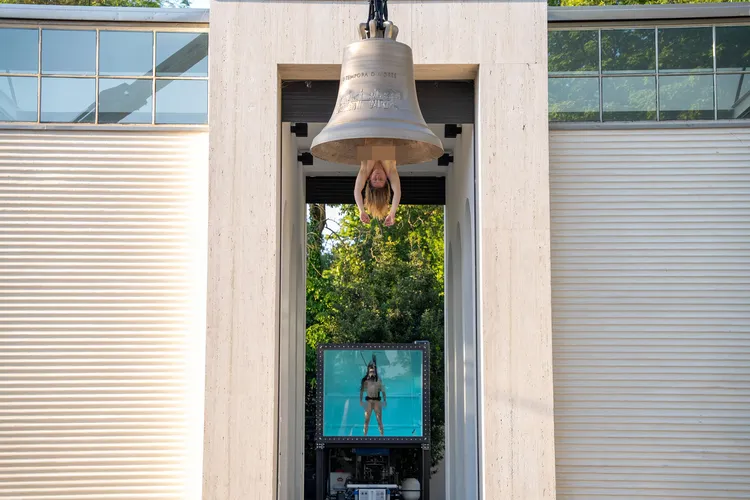
A crowd stands in near silence, their heads tilted upward in collective anticipation.
Every gaze is fixed on a bell. Inside it, a woman hangs upside down, using her own body as the bell’s clapper.
Her unclothed body swings into the metal surface, striking it repeatedly until the sound reverberates through the space.
Then, as the resonance falls away, applause and cheers erupt with force.
This is one of the most talked-about works at Venice Biennale 2026, turning the Austrian Pavilion into one of the national pavilions most widely covered by the art press.
The project is titled SEAWORLD VENICE. It is the work of Florentina Holzinger, the Austrian artist and choreographer who has spent time observing, collecting information and raising questions around one of the world’s most essential resources – water.
Every hour, the bell is struck repeatedly. It does not simply mark time. It also functions as a signal, calling visitors together to witness an intense phenomenon staged inside the pavilion.
As an exhibition strategy, the work is unquestionably a crowd-puller. And it performs that function very well.
SEAWORLD: A World of Water, and Urine
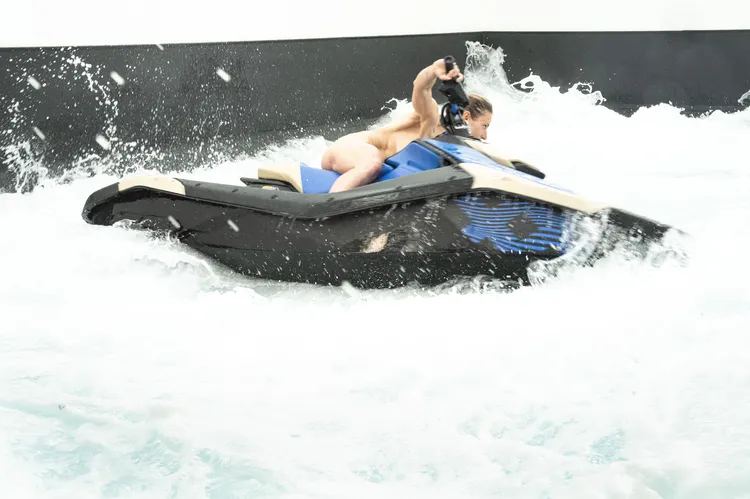
Inside the pavilion, another performance features a woman riding a jet ski in repeated circles while remaining in place, a gesture that points toward destructive tourism colliding with a city slowly sinking into water.
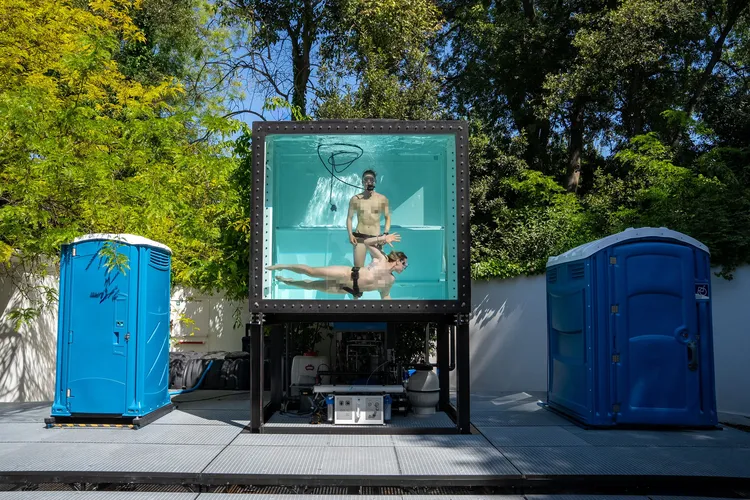
There is also a work that leaves many visitors stunned. A performer appears inside a large aquarium, flanked by toilets that visitors are allowed to use.
The work explains itself with striking clarity. The water seen inside the tank comes from treated “urine,” accompanied by the startling phrase, “I live in your piss.”
This is a work that speaks clearly through the language of Abject Art, a form of art that draws on bodily fluids, waste and materials often considered repulsive. It pulls back into the centre of the art space what society usually treats as dirty, shameful or better kept hidden, whether the naked body, urine or human waste. In doing so, it asks, with unsettling precision, what kind of world we are truly living in.
Personally, I have rarely seen abject art used so openly as a central language at the Venice Biennale, especially at the level of a fully realised national pavilion.
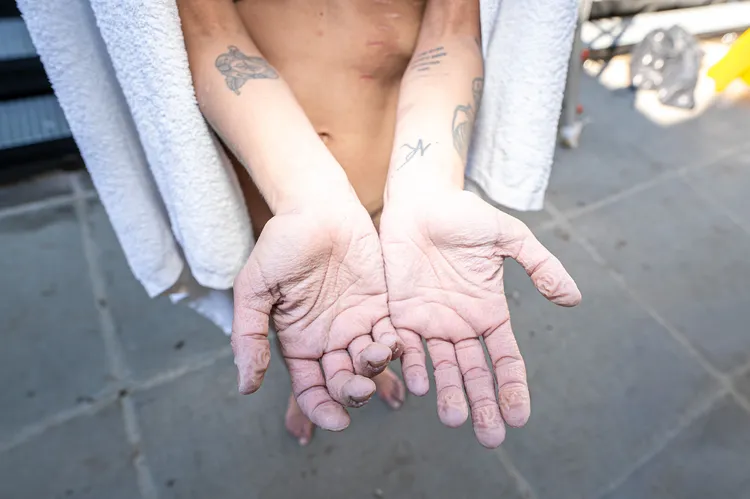
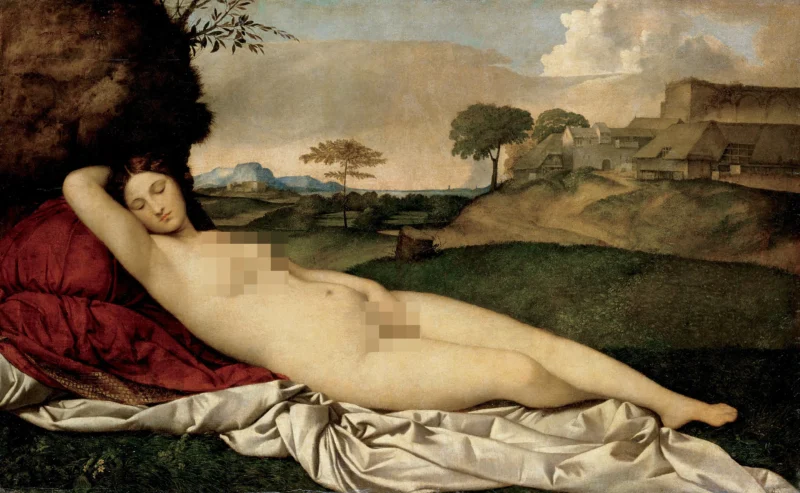
In creating the work, Holzinger drew inspiration from Giorgione’s painting Sleeping Venus (1510), painted in Venice more than 500 years ago.
She wants viewers to experience the feeling of a survivor looking out from the ruins of a civilisation dissolving in urine.
Before Venice Biennale 2026 opened to the public, Holzinger also staged a prologue to the work on the waters of Venice. This site-specific performance brought together the human body, surrounding sound and architecture into a single field of experience.
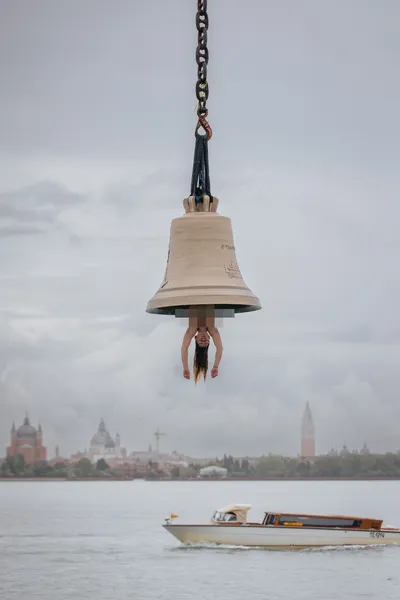
Of course, this project does not end in Venice.
In addition to the main pavilion presentation, the project also includes site-specific performances in public locations across Venice before travelling to Vienna Festival / Nitsch Foundation in Vienna and Prinzendorf on May 23, 2026, and to Kunsthaus Bregenz on July 11, 2026.
It will also continue through collaborations with TRANSART Festival in Bolzano and Hartwig Art Foundation in Amsterdam.
In the following year, adapted versions of the work are scheduled to travel to Gropius Bau in Berlin in March 2027, Kunsthalle Wien in Vienna in June 2027, and Amant in Brooklyn, New York, in spring 2028.
SEAWORLD VENICE: Exhibition Information
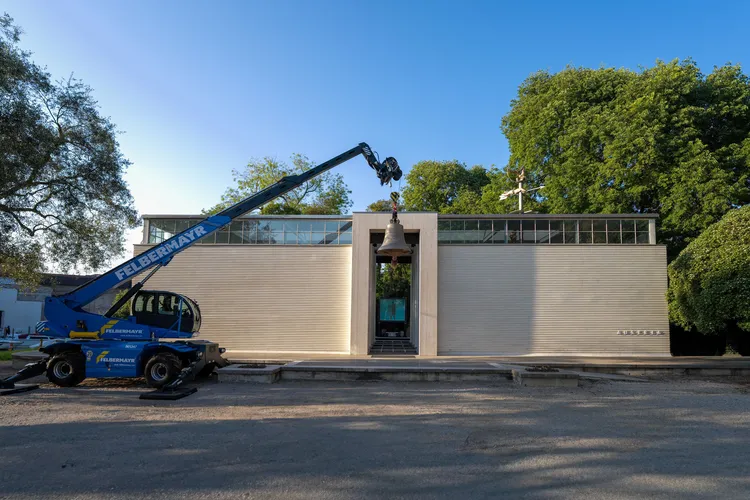
SEAWORLD VENICE is on view at the Austrian Pavilion, Giardini della Biennale, Sestiere Castello, 30122 Venice, Italy.
The exhibition is open now through November 22, 2026. Details are as follows, based on information available as of May 14, 2026.
During the summer season, from May 9 to September 30, 2026, the Giardini is open daily from 11:00 to 19:00. The Arsenale is open Tuesday to Thursday and Sunday from 11:00 to 19:00, with extended hours until 20:00 on Fridays and Saturdays.
During the autumn season, from October 1 to November 22, 2026, both the Giardini and Arsenale are open from 10:00 to 18:00. The venues are closed every Monday, except on May 11, June 1, September 7 and November 16.
Story: Tae Art Man
