Read in English / 阅读语言  ไทย
ไทย  简体中文
简体中文
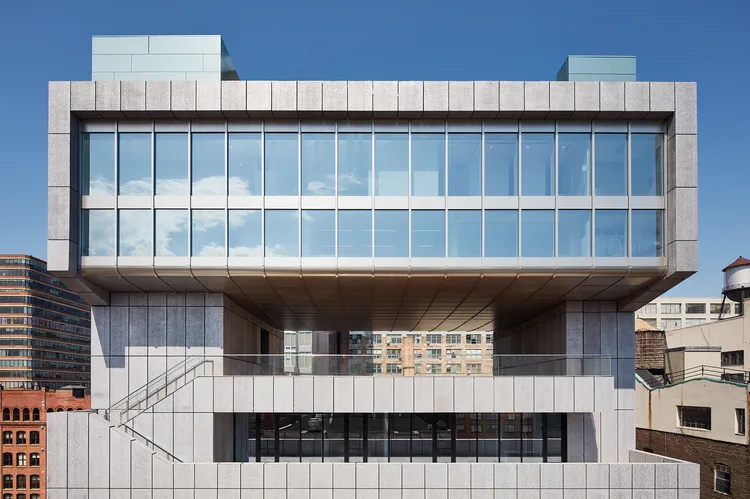
Pace Gallery, founded in Boston in 1960 and now operating spaces in New York, Los Angeles, London, Geneva, Berlin, Seoul and Tokyo, has announced what may be one of its most significant restructurings in years.
According to The New York Times, the restructuring has seen Pace remove more than 50 artists and artist estates from a roster of around 130 names. The gallery has also laid off about 50 employees out of a total workforce of roughly 250 people.
Marc Glimcher, chief executive of Pace Gallery, offered a strikingly direct explanation for the decision. He said the art world had changed dramatically over the past decade, and that the current gallery model was not simply broken, but beyond repair. For Glimcher, the mega gallery model, built on expansion and scale, had become increasingly difficult to manage and had made it harder to give each artist the depth of attention they deserved.
After the restructuring, Pace is expected to focus more closely on around 80 remaining artists, placing greater emphasis on the quality of its relationships rather than the size of its roster.
However, Artnet has reported additional details after comparing the list of artists on Pace’s website between February and June. According to that comparison, several names no longer appeared on the gallery’s roster, including teamLab, Richard Avedon, Robert Rauschenberg, Paul Graham and Xiao Yu.
At this stage, Pace has not officially confirmed whether the disappearance of these names from its website is directly connected to the current restructuring.
The announcement follows an earlier development in October 2025, when Tae Art Man reported on the closure of Pace Gallery’s Hong Kong space. Seen in this context, the latest restructuring is particularly noteworthy. Within less than a year, one of the world’s major galleries has moved from closing a regional space to making a large-scale internal adjustment, something that does not happen often at this level of the global gallery system.
Glimcher closed his statement with a more optimistic framing, saying that Pace was not retreating, but “walking backwards into the future,” reconnecting younger artists with the gallery’s spiritual foundations and building on more than 60 years of history.
What remains to be seen is whether more global galleries will announce similar moves in the months ahead. For now, the case of Pace Gallery once again underlines a point that Tae Art Man has been stressing for some time: sustainability in the art world is no longer a distant concern. It has become an unavoidable condition for survival.
Follow Tae Art Man’s analysis on how this restructuring may shape the future of the global gallery system, and how people working in the art world may need to adapt, on the Tae Art Man YouTube channel.
Story: Tae Art Man
Image: Pace Gallery in New York by Thomas Loof, courtesy of Pace Gallery
