Read in English / 阅读语言  ไทย
 日本語
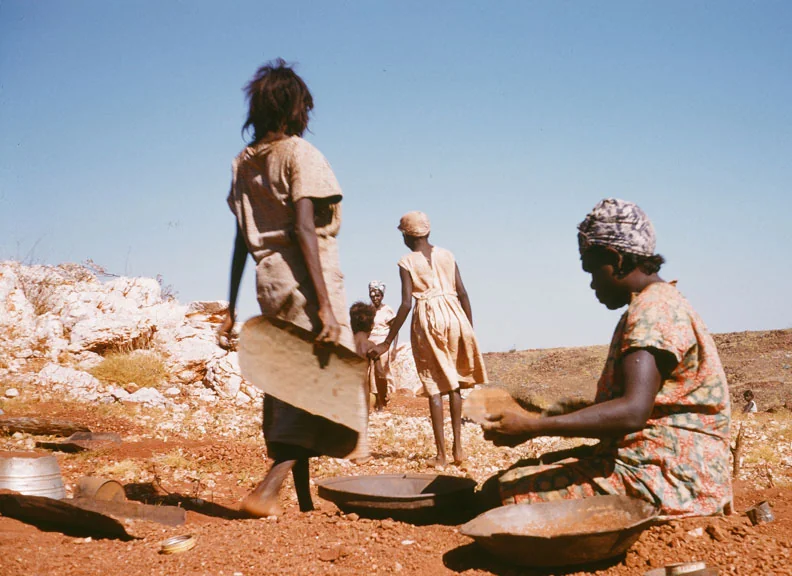
Slides found beneath a wardrobe helped reunite approximately 350 colour photographs, according to The Guardian, including records of Aboriginal communities established after Australia’s 1946 Pilbara strike.
Photographs by anthropologist John Wilson are on view in Strike Camps: The Photographs of John Wilson at the University of Western Australia’s Lawrence Wilson Art Gallery in Perth until December 5, 2026. They document work, family life and the organisation of communities created by the strikers.
Aboriginal and Torres Strait Islander readers are advised that this article may contain images of people who have passed away.
The communities after the walk-off
In 1946, around 800 Aboriginal people left pastoral stations across the Pilbara in protest against exploitation and poor working conditions. They established independent communities, supporting themselves through mining, pearl-shell farming and pastoral enterprises.
The photographs on display were taken in the 1950s and 1960s, rather than during the 1946 walk-off itself. Their significance lies in showing what followed: a labour struggle developing into the construction of economic livelihoods and collective decision-making.
Work and everyday life as a photographic record
The university’s exhibition information describes images of digging and sorting minerals, operating conveyor belts and crushers, driving trucks and machinery, and taking part in community meetings. Yandies, traditionally used to sift seeds, were adapted to separate heavier minerals from soil.
These working scenes appear alongside people resting beneath shelters. The photographs shift attention from a single protest to the systems of work and everyday life that continued afterwards. The early colour images are both social documents and part of Australia’s photographic history.
Community participation in interpreting the archive
The organisers’ release identifies a curatorium including First Nations community members and Elders alongside academics and arts practitioners. Contemporary animations were developed with First Nations members of this group and are presented alongside the photographs.
That participation matters because the original images were made by an anthropologist studying the communities. Their presentation involves both the photographer’s perspective and the role of the people whose history they record. The organisers say Wilson’s family authorised the photographs’ exhibition.
Visiting Strike Camps
The exhibition runs from September 3 to December 5, 2026, at Lawrence Wilson Art Gallery, University of Western Australia, 35 Stirling Highway, Perth, Australia. An installation closure interrupted the run, but the gallery has reopened.
According to the gallery’s visitor information, opening hours are Tuesday to Saturday, 11am–4pm, with free admission. The organisers advise that the exhibition includes images and names of deceased Aboriginal people. Check the latest notices before travelling.
Story: Tae Art Man
